UAV Smoke Detection
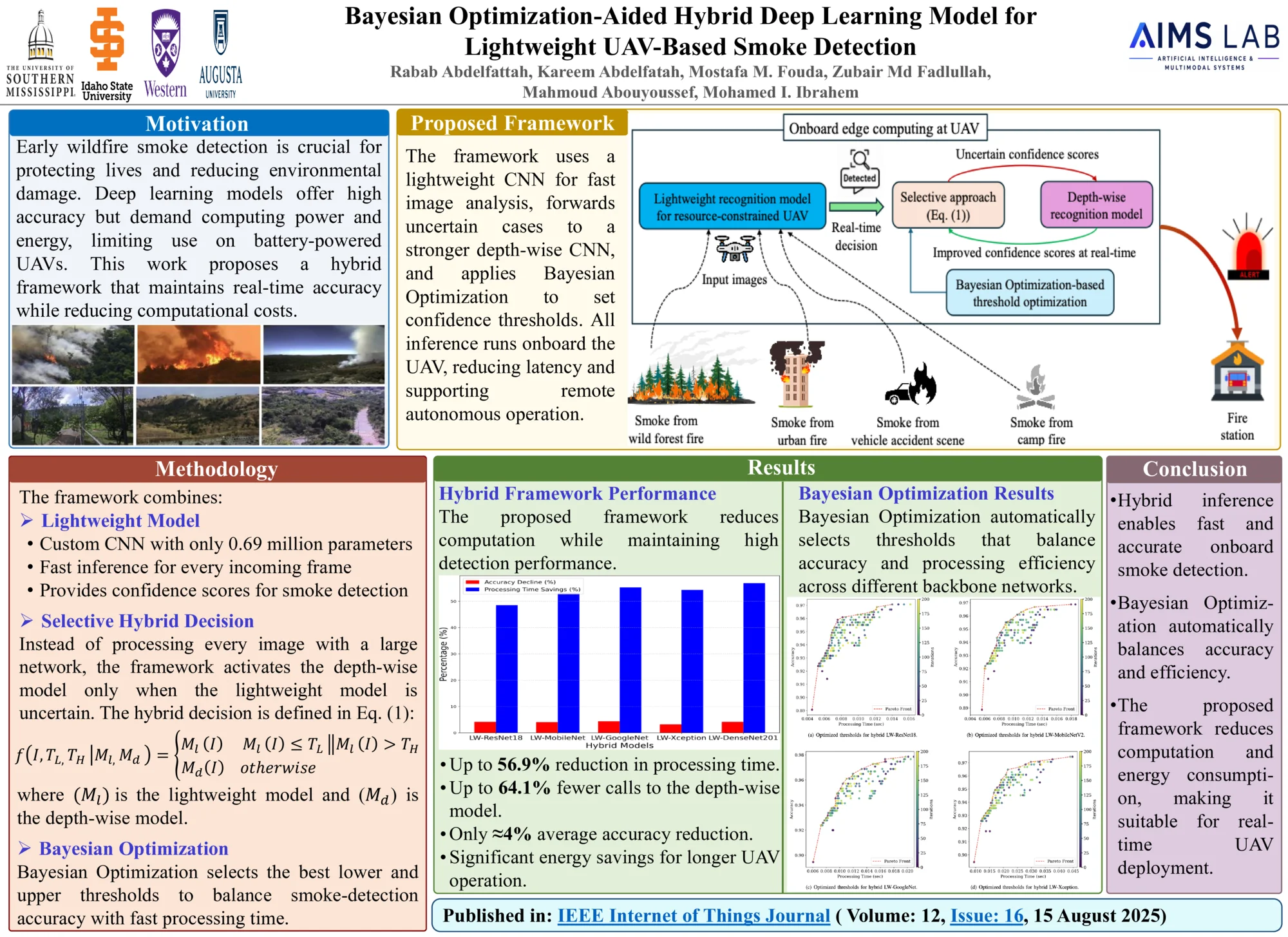
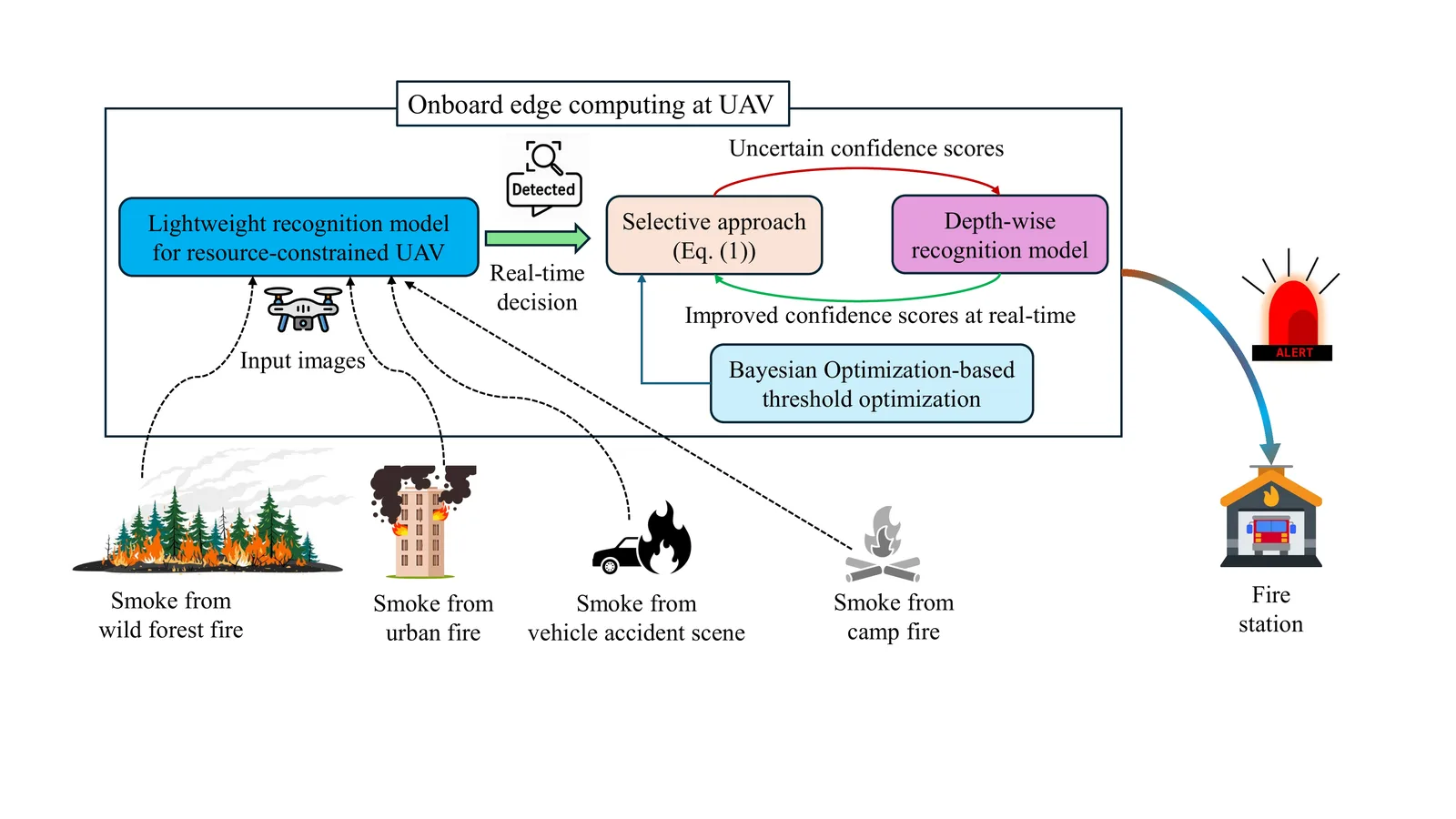
A lightweight CNN screens every frame on the drone and hands only uncertain ones to a stronger model, cutting processing time by up to 56.9%.
Overview
Early wildfire smoke detection protects lives and limits damage, but accurate deep models need more compute and energy than a battery-powered UAV can spare. This work keeps all inference onboard: a custom CNN with 0.69 million parameters scores every incoming frame, and a stronger depth-wise CNN runs only when that score falls between a lower and an upper confidence threshold. Bayesian Optimization picks the two thresholds to balance accuracy against processing time.
What we found
Across five backbone networks, the hybrid framework cut processing time by up to 56.9% and calls to the depth-wise model by up to 64.1%, at an average accuracy cost of about 4%. The saved computation translates into energy savings and longer flights.
Poster